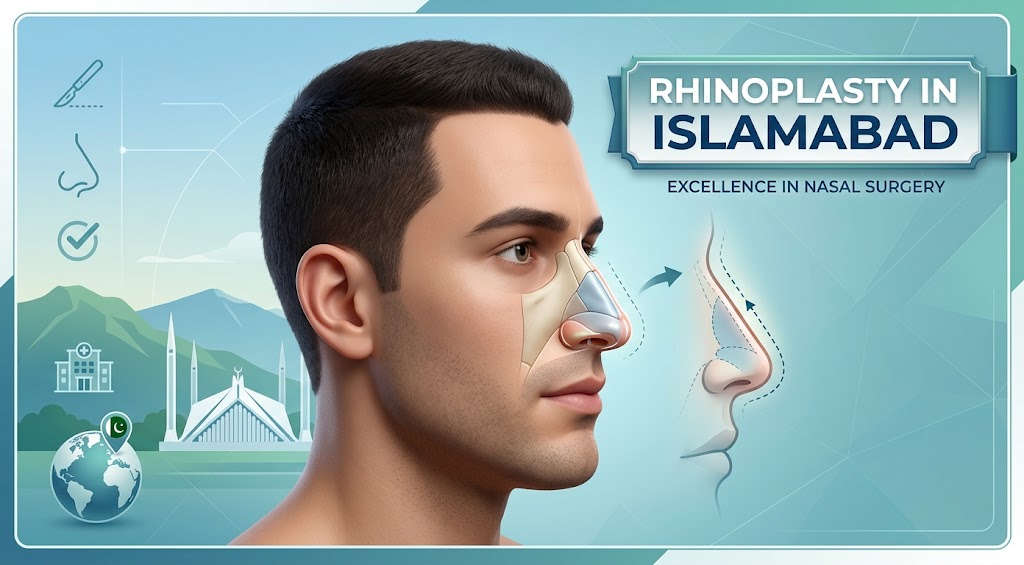
Choosing Rhinoplasty in Islamabad: Better Results Guide
Rhinoplasty is a surgical procedure that changes the shape, size, or structure of the nose to improve facial balance and, in some cases, breathing. People consider it for a dorsal hump, broad nasal tip, asymmetry, or facial disproportion. Others seek surgery after an injury or because structural problems affect airflow. Rhinoplasty in Islamabad is an increasingly discussed option, but the key decision is choosing a qualified surgeon and understanding realistic outcomes.
What Is Rhinoplasty?
Rhinoplasty reshapes nasal bone, cartilage, and soft tissue according to the patient’s anatomy and goals. The procedure may involve reducing a hump, refining the tip, narrowing or straightening the nose, correcting asymmetry, or supporting the nasal framework. Depending on the case, surgery may be performed through an open or closed approach.
A good surgical plan considers both appearance and function. The nose sits at the center of the face, so even a structural change can influence harmony. During consultation, the surgeon should assess the nasal airway, skin thickness, cartilage strength, facial proportions, and previous injuries or operations before recommending a technique.
Why People Consider Rhinoplasty in Islamabad
Patients may choose Rhinoplasty in Islamabad because they want access to qualified cosmetic and reconstructive surgeons, modern operating facilities, and follow-up care within the capital. However, location alone should never determine the choice of surgeon. Credentials, surgical experience, facility standards, communication, and aftercare deserve greater attention.
Some patients want subtle cosmetic refinement rather than a dramatic transformation. Others have functional concerns, such as difficulty breathing through one or both nostrils. In suitable cases, cosmetic and functional goals can be addressed during the same operation. A consultation helps determine whether the desired change is suitable and technically achievable.
Choosing the Right Surgeon
The surgeon is one of the strongest factors influencing safety and satisfaction. When evaluating Rhinoplasty in Islamabad, look for a properly qualified plastic, facial plastic, or ENT surgeon with relevant rhinoplasty experience. Ask about professional credentials, hospital privileges where applicable, training, and the number and types of nasal procedures performed.
Review before-and-after photographs carefully, but remember that photographs are not guarantees. Look for patients with anatomy and goals similar to yours. A responsible surgeon should explain benefits, limitations, risks, alternatives, and the possibility of revision. Be cautious of promises of a “perfect” nose or identical results based on a reference photograph.
Consultation and Treatment Planning
A thorough consultation for Rhinoplasty in Islamabad is the foundation of a personalized plan. The surgeon should discuss what bothers you, what you hope to change, and whether your expectations match what surgery can realistically accomplish. Medical history, medications, allergies, previous nasal surgery, smoking, and breathing problems should also be reviewed.
The surgeon may examine the nose from multiple angles and assess internal structures when functional symptoms are present. Digital imaging can help explain possible changes, but it should be viewed as a communication tool rather than a promise of the final result. Clear discussion can prevent misunderstandings.
How the Procedure Works
Rhinoplasty is performed under anesthesia, with the exact method selected according to the patient’s anatomy and surgical objectives. In an open approach, a small incision is made across the tissue between the nostrils, allowing broader access to the nasal framework. A closed approach uses incisions inside the nostrils.
During surgery, cartilage and bone may be reshaped, removed, repositioned, or supported with grafts. The skin and soft tissues are then allowed to settle over the revised framework. The complexity and duration vary significantly from patient to patient. If breathing correction is required, additional structural work may be performed at the same time.
Recovery After Surgery
Recovery is gradual. Swelling, bruising, congestion, tenderness, and temporary changes in sensation are common during the early period. A splint or external support may be used for several days, depending on the surgical technique. Patients generally need to rest, keep the head elevated, and avoid pressure or accidental impact to the nose.
Many people return to light daily activities soon, but strenuous exercise and activities that could injure the nose may need to be postponed. Swelling decreases gradually, while subtle refinement can continue for months. Follow-up appointments let the surgeon monitor healing and address concerns.
Benefits and Realistic Expectations
Rhinoplasty can improve facial proportion, refine selected nasal features, and sometimes improve airflow when structural problems are corrected. The goal should be a nose that fits the individual face rather than one that follows a universal template. Natural-looking results usually depend on respecting the patient’s anatomy.
Rhinoplasty in Islamabad may provide satisfying results when the patient and surgeon share a clear understanding of the intended changes. Nevertheless, no operation can guarantee a specific appearance. Healing varies because skin thickness, scar formation, cartilage behavior, age, genetics, and surgical complexity all influence the final outcome.
Risks and Safety Considerations
Like any surgery, rhinoplasty has potential risks. These can include bleeding, infection, anesthesia-related complications, persistent swelling, numbness, scarring, asymmetry, breathing difficulties, or dissatisfaction with the appearance. Some patients may require revision surgery if healing or structural changes produce an unsatisfactory result.
Safety begins before the operation. Patients should disclose medical conditions and medications honestly, follow preoperative instructions, and choose an appropriately equipped surgical facility. After surgery, urgent symptoms such as significant bleeding, severe breathing difficulty, high fever, or rapidly worsening pain should receive prompt medical attention.
Understanding the Cost
The cost of Rhinoplasty in Islamabad varies according to surgeon experience, procedure complexity, anesthesia, facility charges, diagnostic needs, and whether functional correction or revision surgery is involved. A low advertised price may not represent the complete cost, especially if important services are excluded.
Instead of selecting a provider solely by price, request a transparent estimate that explains what is included. Ask about consultation charges, anesthesia, operating-room fees, medications, follow-up visits, and possible additional costs. Financial clarity helps patients compare options responsibly without compromising safety or quality.
Who May Be a Suitable Candidate?
Suitable candidates are generally healthy individuals with realistic expectations and a clear reason for wanting nasal surgery. Facial growth should be sufficiently mature, and any significant medical or breathing issue should be assessed before treatment. Emotional readiness is also important because recovery takes time and the final result is not immediate.
People considering surgery mainly because of pressure from others may benefit from postponing the decision. A good consultation should allow the patient to ask questions without feeling rushed. The decision should be informed, voluntary, and based on goals rather than unrealistic social-media standards.
Preparing for Surgery
Preparation can make recovery easier. Follow the surgeon’s instructions regarding medications, supplements, smoking, alcohol, food, and transportation. Arrange appropriate time away from demanding work or study and prepare a comfortable recovery area at home. It is also helpful to have someone available for assistance immediately after anesthesia.
Patients should understand postoperative restrictions before the procedure begins. Knowing when to attend follow-up visits, how to protect the nose, and which symptoms require medical attention can reduce anxiety during recovery. Written instructions are useful because remembering every detail on the day of surgery can be difficult.
Final Thoughts
Rhinoplasty in Islamabad can help improve nasal appearance, facial balance, or selected functional concerns. Strong outcomes depend on careful patient selection, realistic expectations, skilled planning, safe facilities, and consistent aftercare.
Before committing to Rhinoplasty in Islamabad, schedule a detailed consultation and ask direct questions about technique, expected recovery, risks, functional considerations, and revision possibilities. With informed decision-making and appropriate medical guidance, patients can approach nasal surgery with realistic expectations and a clearer understanding of the journey from consultation to healing.